Which Countertop Material Is Right for Your Home? Granite vs. Quartz, Marble, Dekton and Porcelain.
Choosing countertops is one of the biggest decisions you’ll make when designing a kitchen or bathroom. Not only do countertops take up a significant amount of visual space, but they’re also one of the hardest-working surfaces in your home.
Granite and marble are not your only natural stone options – high end stones like quartzite are increasingly popular, engineered quartz comes in hundreds of colors and patterns, and newer engineered materials such as Dekton offer impressive durability and performance.
As with most interior design decisions, there isn’t one ‘best’ material. When we're selecting countertops for a new build or remodel, we look at how the space will be used, how much maintenance the homeowner is willing to do, the overall design aesthetic and of course, the budget.
Here’s how six of the most popular countertop materials compare.
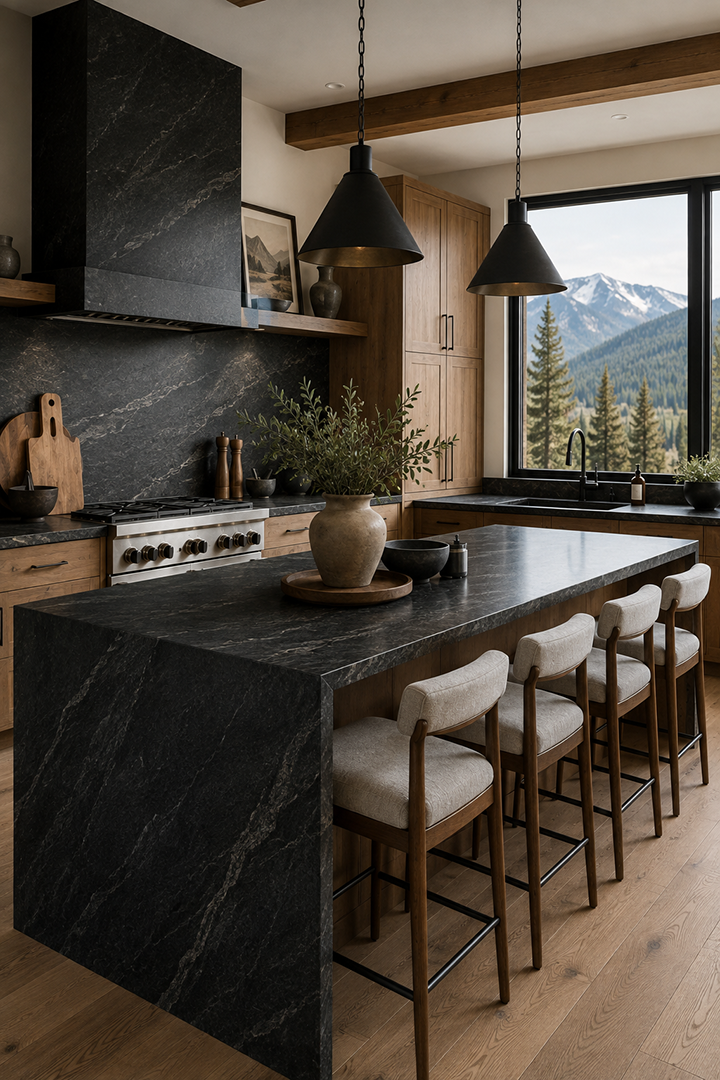
Granite Countertops
Granite has been a kitchen staple for decades, and for good reason. This natural stone is extremely durable, heat resistant and available in an enormous range of colors and patterns.
Many of my clients associate granite with the heavily speckled kitchens of the early 2000s, and they write it off immediately. They’re surprised to see that there are some beautiful granites available today with subtle movement and sophisticated, organic coloring that works especially well in a mountain modern home in an area like Whitefish.
Pros of Granite
Durability: Granite is one of the hardest commonly used natural countertop stones and has excellent resistance to scratches and everyday wear. Since it’s a natural stone, scratches can be refinished.
Heat and stain resistance: It handles heat exceptionally well, unlike quartz which will turn yellow if exposed to extreme heat. Many granites also have good stain resistance, since they have relatively low absorption rates. Depending on the particular stone, sealing also provides additional stain protection.
Cost: Granite is available at a surprisingly wide range of price points, and is often more affordable than quartz. It also offers excellent value compared with premium quartzite or marble.
Aesthetics: Every slab is unique, and the right granite brings the texture and authenticity of natural stone into a home. I find that granite looks best in darker colors (such as the widely available Black Mist), so it works well with a moody, high-contrast or rustic design.
Cons of Granite
Maintenance: Granite requires periodic sealing, usually once a year. It’s very easy to do though, and in my opinion the quick job of sealing granite counters is well worthwhile.
Variation: Because granite is a natural product, samples don't always tell the whole story. You really need to see and approve your slabs individually, and make sure you view it together with your other samples.
Best For:
Granite is a great choice for busy family kitchens, vacation homes and homeowners who want natural stone without the higher maintenance of marble. It can also work particularly well in rustic, transitional and mountain modern interiors.
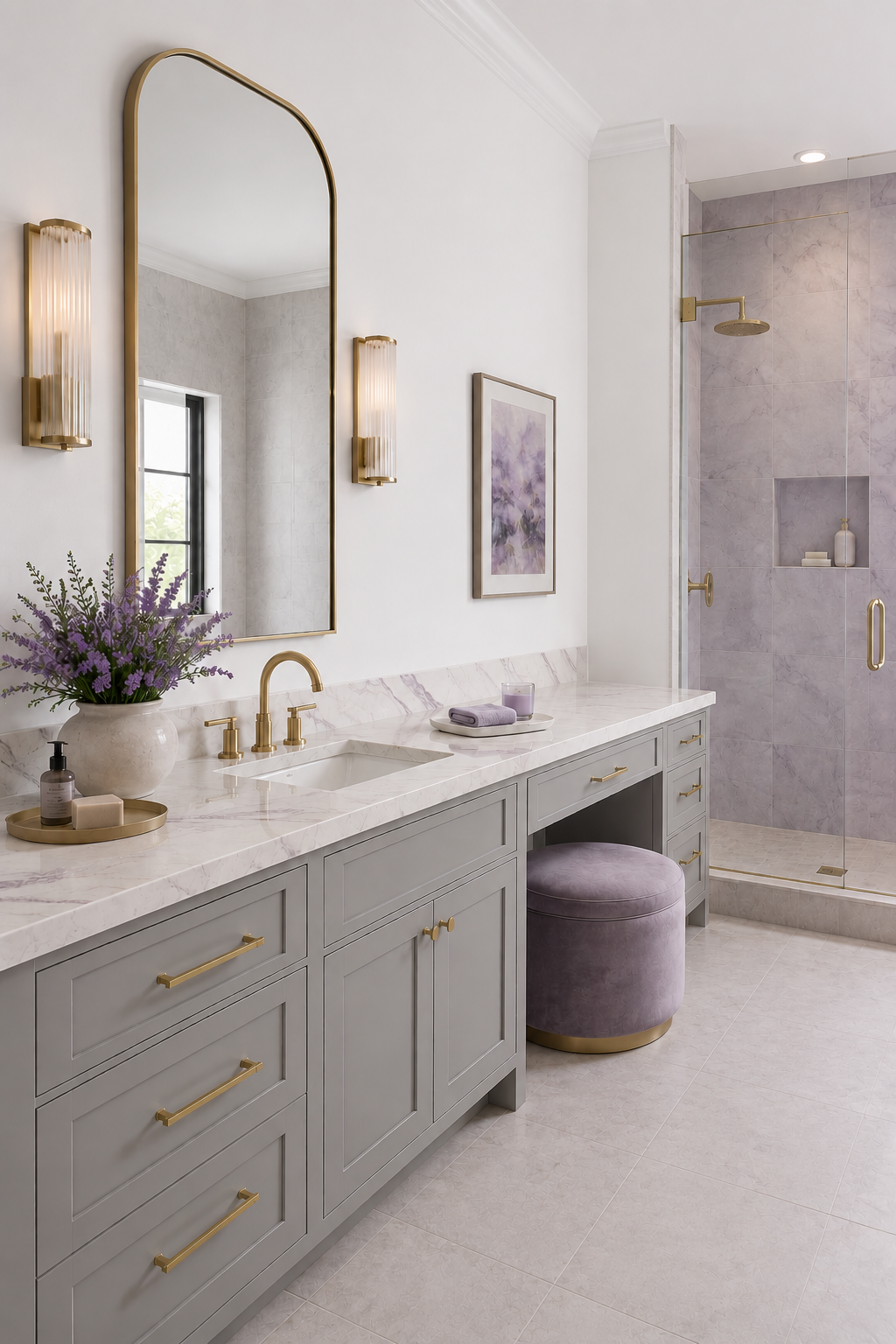
Quartz Countertops
Quartz is an engineered product typically made from quartz minerals combined with resins and pigments. It has become one of the most popular countertop choices because it's consistent, durable and relatively easy to live with.
For homeowners undertaking a kitchen remodel, quartz is often worth considering when low maintenance is high on the priority list.
Pros of Quartz
Maintenance and stain resistance: The nonporous surface is easy to clean and doesn't readily absorb liquids. This makes it resistant to staining and eliminates the need for regular sealing due to the resin content of the material.
Durability: Good-quality quartz is resistant to scratches, chips and everyday wear. And because engineered slabs are more consistent than natural stone, planning seams and matching multiple slabs can be easier for installation.
Cost: There is a broad range of price points, making it possible to find quartz for many mid-range through high-end projects. However, you generally get what you pay for with quartz and higher quality quartz products are typically more expensive than commonly available granites.
Aesthetics: Quartz offers an enormous selection of colors. If you want a very specific color like a green, pink or purple without the unpredictability of natural stone, it's hard to beat and samples are highly representative of what you’ll get with the slab.
Cons of Quartz
Heat Resistance: Quartz doesn’t have it. The resins used in quartz mean that hot pans shouldn't be placed directly on the surface, and heat-generating appliances need to be considered carefully. You also need to make sure that if you’re doing a quartz backsplash, that your cooktop has an appropriate distance.
Aesthetics: While quartz has improved tremendously, even the best marble-look quartz doesn't have quite the same depth, translucency and irregularity as real stone. If you love materials that develop character and variation, quartz won’t have that patina that real stone does.
Safety: It’s been in the news a lot recently, and for good reason. If occupational safety is not properly observed, there are risks to workers associated with inhaling crystalline silica dust during fabrication. So it’s important your fabricator is following professional guidelines to avoid this.
Best For:
Quartz is ideal for busy households, low-maintenance kitchens, rental properties and homeowners who prioritize consistency and practicality. It's also a good choice if you have a very specific color palette and don't want to search stone yards for the perfect natural slab.
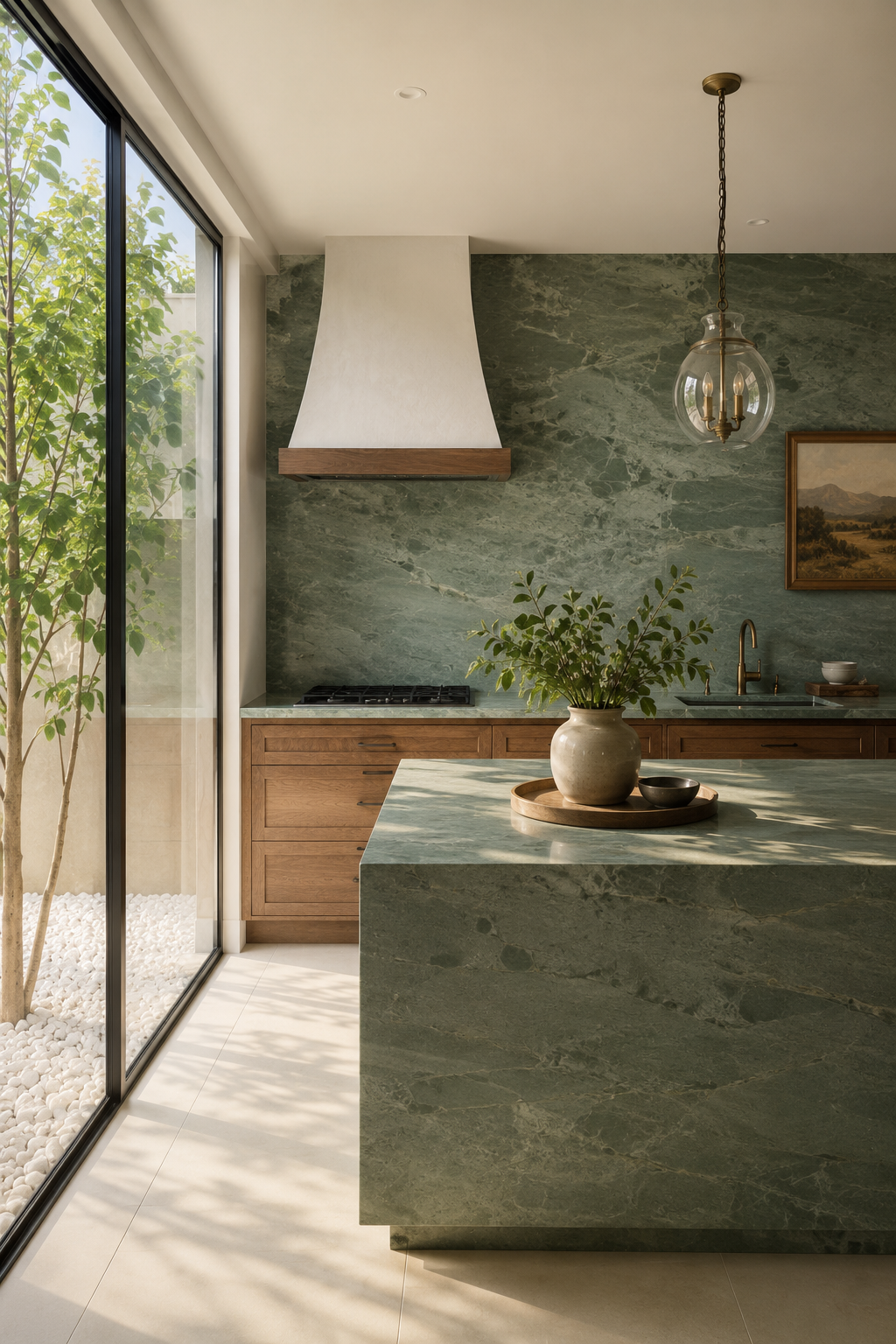
Quartzite Countertops
Quartz and quartzite may sound similar, but they're very different materials. Quartzite is a natural metamorphic stone rather than an engineered product, and it has become one of my favorite materials to specify when a client wants the beauty of natural stone with excellent durability. It’s a great choice if you love the movement of marble but are nervous about living with it.
Pros of Quartzite
Durability and heat resistance: True quartzite is extremely hard and holds up very well to everyday kitchen use as well as heat exposure. It’s also a great choice for outdoor kitchens as it will withstand sun, snow and extreme temperatures.
Aesthetics: This is where quartzite really shines. Slabs can have dramatic veining, subtle movement and incredible depth. Many lighter varieties give you the sophisticated look people love about marble with greater durability. While light creams and grays are popular, quartzite also comes in stunning colors like the Brazilian Verde Esmeralda stone shown.
Longevity: A good quartzite countertop feels appropriate in a high-end home and can age beautifully rather than following a short-lived design trend.
Cons of Quartzite
Cost: This is often one of the more expensive countertop choices. Premium slabs can be costly, and fabrication can also add to the price. Often when I specify natural stone, we’ll run it up the backsplash which adds to both material and install cost.
Staining and installation: Porosity varies by stone, so some quartzites need sealing to help prevent stains. Many are also quite brittle – such as the popular Taj Mahal quartzite – so you need a good fabricator to install without cracking, especially for complicated edge details, large islands and waterfall applications.
Variation: The slab you fall in love with is the slab you're getting. While this could also be considered a pro since each slab is unique, it does make careful slab selection and layout especially important.
Best For:
Quartzite is an excellent choice for a luxury custom home, high-end kitchen remodel or homeowner who prioritizes natural materials and wants a statement countertop.
I do use quartzite often in Montana homes, where organic stone sits beautifully alongside white oak, walnut, iron and other natural materials. It's a combination you'll see frequently in the type of new construction projects we design throughout the Flathead Valley in areas such as Bigfork.
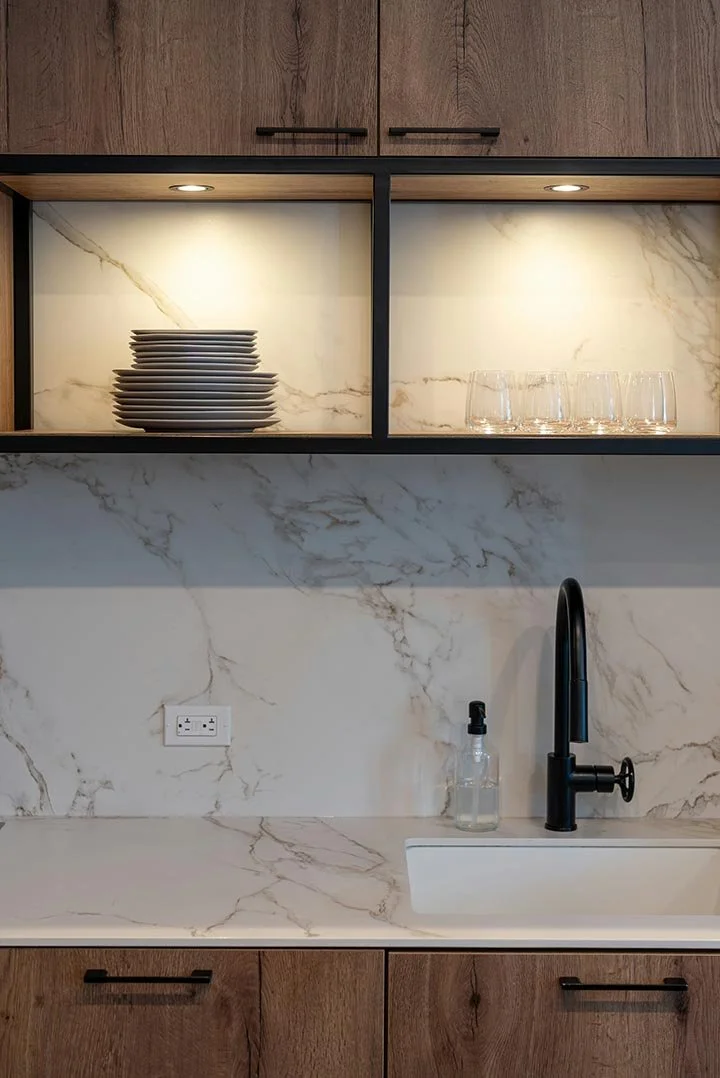
Marble Countertops
There is a reason designers keep coming back to marble – it has a truly unique look that isn’t easily replicated by engineered products, with its soft veining, depth and subtle translucency. But you need to go into marble ownership with realistic expectations.
Pros of Marble
Aesthetics: Marble is timeless. From Carrera and Calacatta to richly colored dramatic varieties, it can make even a simple kitchen or bathroom feel special.
Heat resistance: Marble naturally handles heat well, although protecting the surface is still a good habit.
Design longevity: Marble has been used in architecture for centuries. Unlike a manufactured pattern that may eventually identify a particular era, natural marble has an inherent timelessness. No two slabs are identical, giving the finished kitchen or bathroom an individual character.
Cons of Marble
Durability and maintenance: Marble is porous and stains easily, as anyone who has spilled red wine on a marble countertop knows. If you’re not the type of person to wipe up spills immediately, marble probably isn’t for you. It’s softer than granite and quartzite and is more susceptible to scratching. Sealing helps a little, but marble will still show wear.
Etching: This is the issue homeowners sometimes overlook. Acidic substances such as lemon juice, vinegar and wine can etch marble, leaving dull areas on the finish. Sealing helps with staining but doesn't prevent etching. People who can embrace the natural wear that comes with marble – and consider it a patina - will enjoy it the most.
Cost: While some common marbles can be relatively accessible, premium varieties and carefully book-matched installations become expensive quickly.
Best For:
Marble is best for the homeowner who loves natural materials and is comfortable with patina. If a scratch, etch mark or small stain is going to bother you, choose something else. But if you see those imperfections as part of the story of a home, marble can be a timeless choice.
It's also worth considering in lower-use spaces such as a primary bathroom, bar or pantry if you're hesitant about putting it throughout your main kitchen. For more ideas on incorporating natural stone and timeless finishes, take a look at our guide to timeless tile.
Dekton Countertops
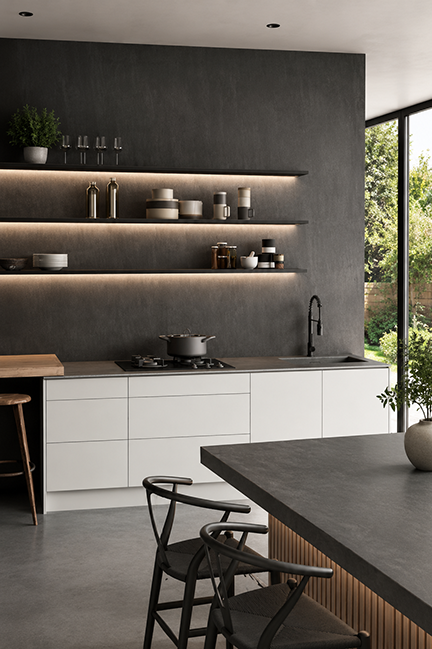
Dekton and its competitor Neolith are ultra-compact manufactured surfaces made using a combination of minerals subjected to high pressure and heat. Its biggest selling point is performance. It's highly resistant to heat, stains, scratches and UV exposure, which gives it an advantage in applications where other countertop materials can struggle.
Pros of Dekton
Durability and stain resistance: Dekton is extremely hard and resistant to scratching and abrasion. I’ve had clients chop directly on a Dekton surface for years with no issues whatsoever. It’s also highly resistant to common household stains and easy to clean. It’s also great for outdoor kitchens as it won’t wear in extreme weather – in fact, it’s also used to clad buildings.
Heat resistance: Dekton performs exceptionally well around high temperatures, making it appealing for serious cooks and kitchens with heavy use. It’s known for being used with invisible cooktops like InvisaCook, where the burner sits under the countertop material.
Aesthetics: There are convincing stone-inspired patterns as well as solid, industrial and contemporary finishes. The huge range of colors and patterns is something I personally love about Dekton. However, you need to be aware that most of their colors are not through-body – meaning that you won’t see the veining in the side section of the material (such as around a sink). This can be mitigated by mitering the material, but it adds to the cost.
Cons of Dekton
Installation: You absolutely need a fabricator who is experienced. The material is extremely hard, and edges can be vulnerable to chipping if the material is mishandled during fabrication or installation. While the material itself is on a par with granite or quartz for cost, installation is usually more expensive.
Repairability: Damage can be difficult to repair inconspicuously, particularly along an exposed edge. I have heard stories of edges chipping if install isn’t perfect – but I’ve had many homeowners who love it once installed.
Best For:
Dekton is particularly well suited to hardworking contemporary kitchens, outdoor kitchens and homes where durability takes priority over having a completely natural material. It's also worth considering in a Montana home with an indoor-outdoor entertaining area where you want visual continuity between the two spaces.
Porcelain Countertops
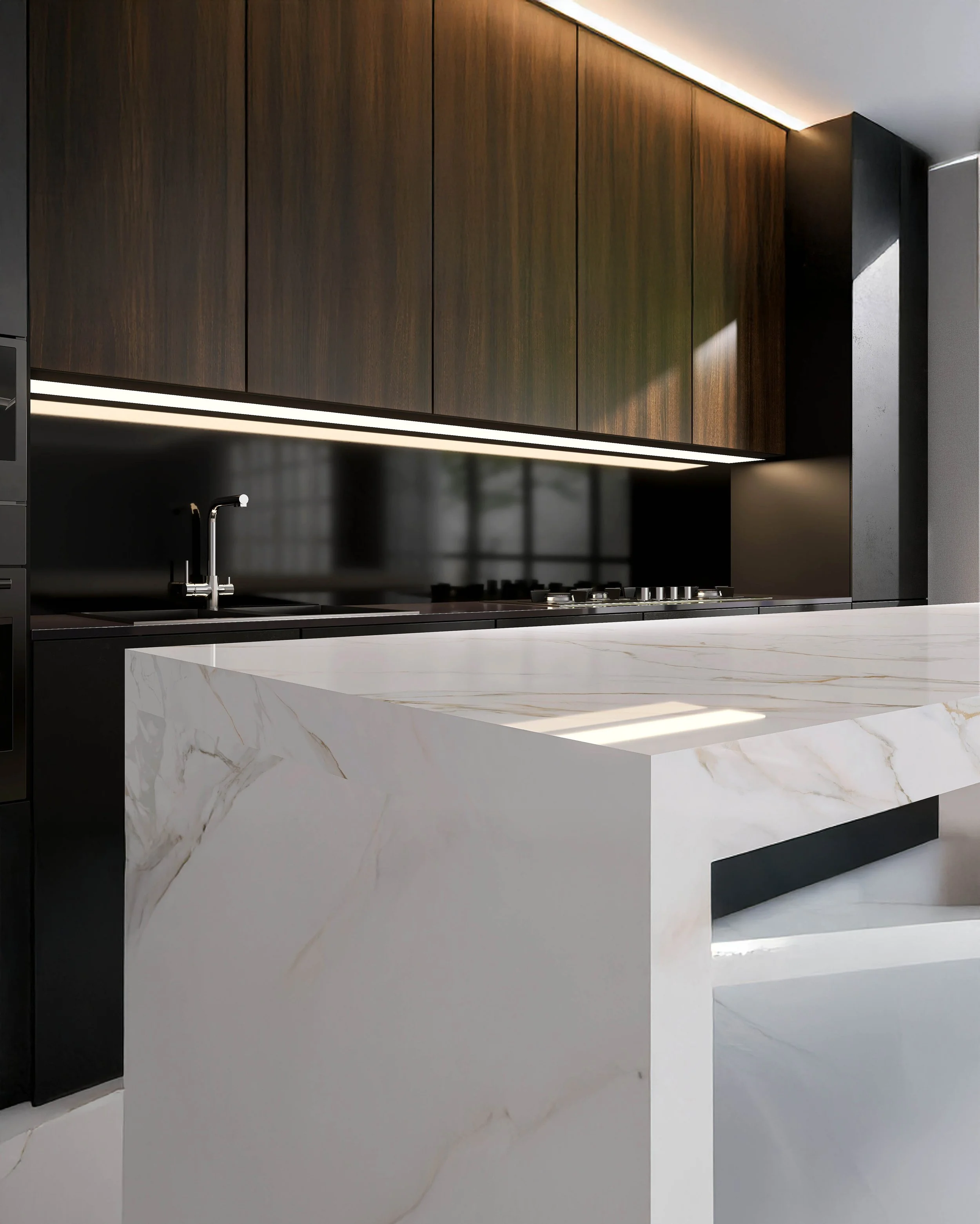
Large-format porcelain slabs have changed dramatically in recent years. They can recreate marble, concrete and other stone looks with remarkably realistic printing while offering excellent stain, heat and UV resistance. Porcelain is also relatively thin compared with many traditional countertop slabs, opening up some interesting design possibilities.
Pros of Porcelain
Stain and heat resistance: Porcelain is highly nonporous and resistant to staining. If you think about how porcelain tile performs in your shower, using as a counter material is equally high-performance. It won’t crack from high heat and easily withstands water exposure.
Maintenance: Its nonporous surface is easy to clean and doesn't require the routine sealing associated with many natural stones. It also works well in spaces with lots of sunlight, without fading and in outdoors applications.
Aesthetics: Today's porcelain can convincingly mimic expensive marbles and other natural stones while offering much easier day-to-day maintenance.
Cons of Porcelain
Installation: This is one of the most important considerations. Large-format porcelain requires a fabricator and installer who knows the product. Slabs can be difficult to handle and edges need careful detailing.
Chipping: While the surface itself is extremely hard, exposed edges can be more susceptible to chipping from a heavy impact. Because of this, I don’t typically specify porcelain counters in kitchens – just in case you drop that heavy cast iron pot onto the edge of the sink.
Cost: High-quality porcelain isn't necessarily a budget substitute for natural stone. Once you factor in premium slabs and skilled fabrication, pricing can be comparable with other higher-end materials.
Best For:
Porcelain is a strong choice for modern homes, statement bathrooms and homeowners who love the appearance of marble but don't want marble's maintenance requirements.
So, which countertop is best for me?
The biggest question here is whether you want maximum practicality, or whether you prefer natural beauty with patina. If function is the most important to you and you want counters you can really beat up, consider Dekton or granite.
If you don’t want a lot of maintenance and you’re a person who uses trivets religiously, quartz is probably a good fit – especially if you want a lot of color choice and predictability in selection.
If natural beauty is the biggest selling point and cost isn’t a factor, then quartzite or marble would be a good choice, as long as you’re willing to embrace the patina.
If budget is the deciding factor, don't rule out granite. There are beautiful, durable granites at approachable price points, while premium quartz, quartzite, porcelain and Dekton can quickly move into a higher price bracket.
Countertops also shouldn't be selected in isolation. Cabinet color, flooring, backsplash, plumbing fixtures and lighting all influence which slab will ultimately look best. That's why we select these elements together during the design process rather than treating the countertop as a standalone decision.
If you're planning a kitchen or bathroom remodel, building a custom home in Whitefish, or looking for a Montana interior designer to help make those hundreds of finish decisions a little easier, Daunt Designs provides full-service interior design throughout Whitefish, Kalispell, Bigfork, Columbia Falls, Lakeside and the surrounding Flathead Valley.