The most compelling interiors rarely come from mass-produced catalogs. They’re built piece by piece – and sometimes hidden gems are found in local stores with affordable pricing.
On a recent sourcing visit to Home Consign & Design, a consignment furniture store in Whitefish, I found three pieces that I’m going to show you how to style. While large stores like these can feel overwhelming to the casual shopper, they’re full of vintage and locally crafted pieces that could be the star of your space.
Each of these pieces is distinct in materiality and story, yet all share the same design language: natural texture, sculptural form, and timeless presence. These are the kinds of pieces that perfectly illustrate how a single object can define an entire room.
Vintage Clawfoot Bathtub: A Sculptural Bathroom Centerpiece
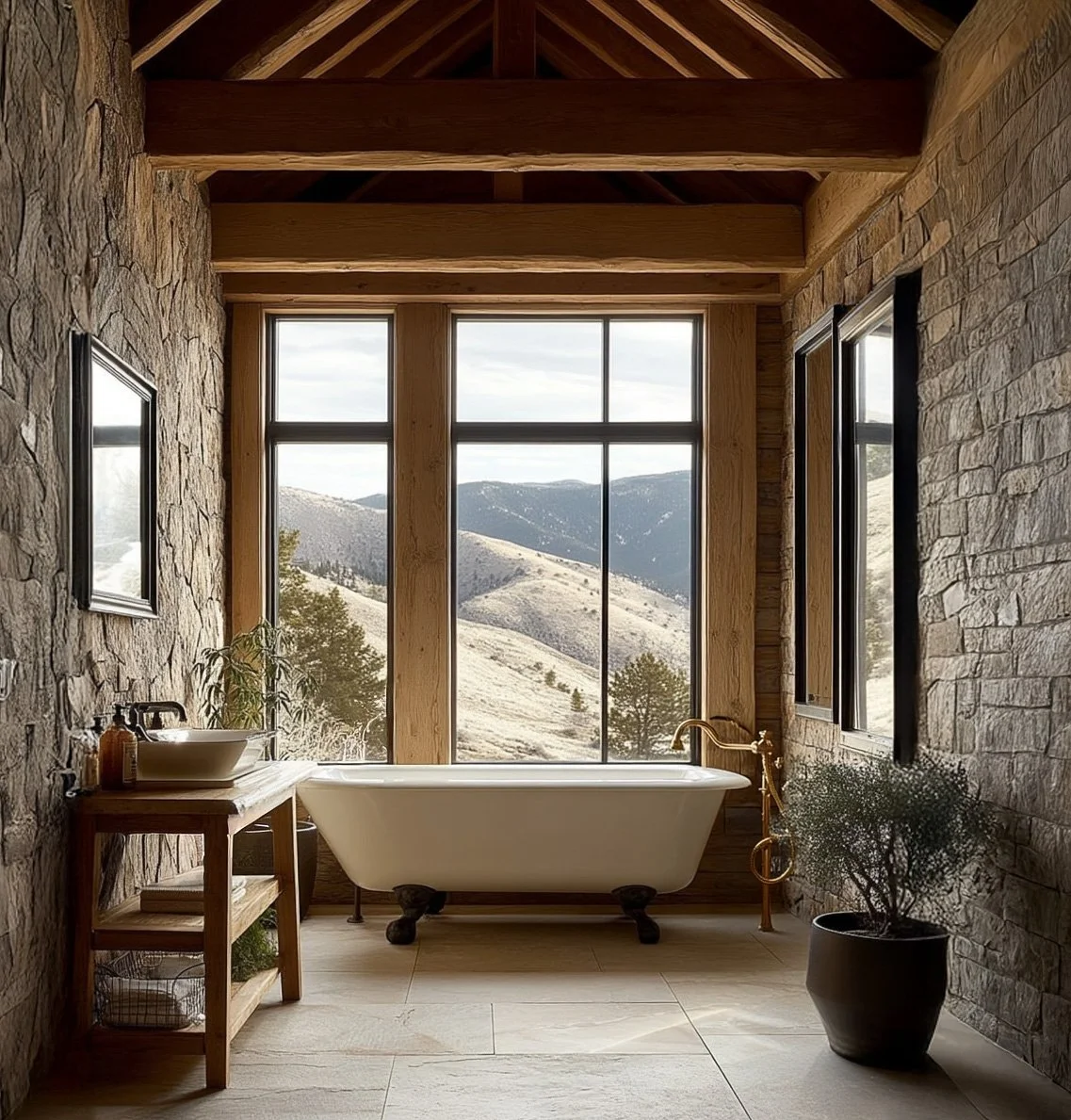
The first find is a vintage clawfoot bathtub - an iconic silhouette that immediately introduces a sense of history and romance into a space. In a modern mountain home, this piece becomes more than functional plumbing; it becomes sculpture.
This could be a great find for a new build home. I would place this tub in a bathroom wrapped in natural materials: honed limestone flooring underfoot, natural stone walls that soften the light, and large picture windows framing expansive mountain views. Heavy reclaimed wood beams and window casing bring the forest inside, while the high ceiling keeps the space from feeling cramped or dark.
Since the tub has aged black feet, I’d play on the black and white contrast by using black accents through the room – in window frames, lighting and art. Then to avoid too much black, I’d use brushed or aged brass plumbing fixtures to complement the vintage character without overpowering it.
A simple freestanding open wood vanity continues the vintage feel, without taking up too much visual space – so as not to detract from the statement tub being the focal point of the room. The overall design direction is quiet luxury.
Live Edge Walnut Dining Chairs: Organic Craftsmanship at the Table
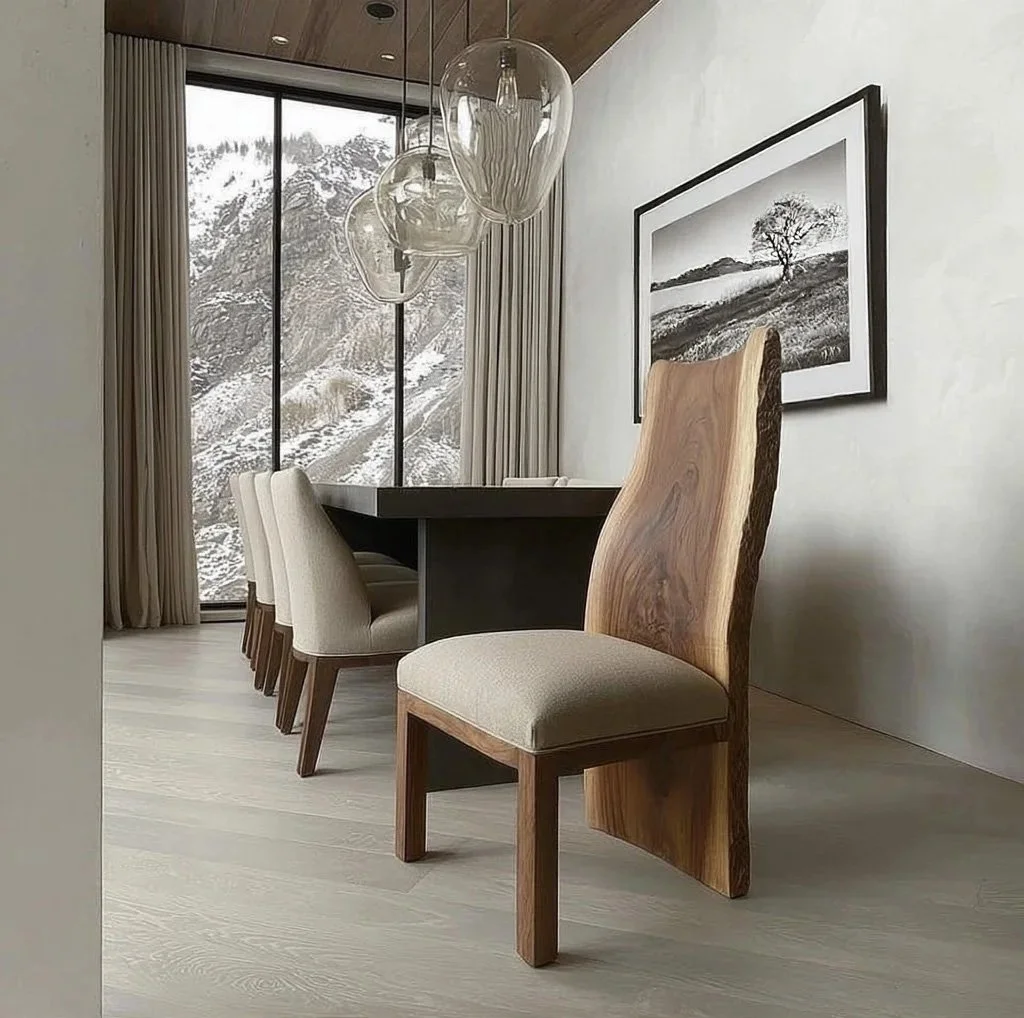
My second discovery is a set of two dining chairs crafted from a live edge walnut slab by a local carpenter. We have so many talented craftsmen in the Flathead Valley, and often they’ll provide pieces directly to stores like Home Consign & Design.
Live edge wood retains the natural contour of the tree, meaning no two chairs are identical. That subtle irregularity is what gives them presence in a dining space. Rather than trying to perfect nature, the design celebrates it.
In a dining room setting, I would pair these chairs with a simple table that’s not made from wood - perhaps in blackened steel or cement. Again, we have plenty of local craftsmen working with metal and concrete who could make a beautiful custom table from these materials. I would place the live edge chairs at the head of the table, with simple upholstered chairs on the sides.
For styling, I’d keep the surrounding palette restrained: minimal overhead ceiling lighting, linen drapery and neutral walls - perhaps in a limewash paint or Venetian plaster to add texture. A collection of blown glass pendants can float above the table without competing with the chairs.
Sculptural Teak Root Side Table: Functional Art in the Living Room
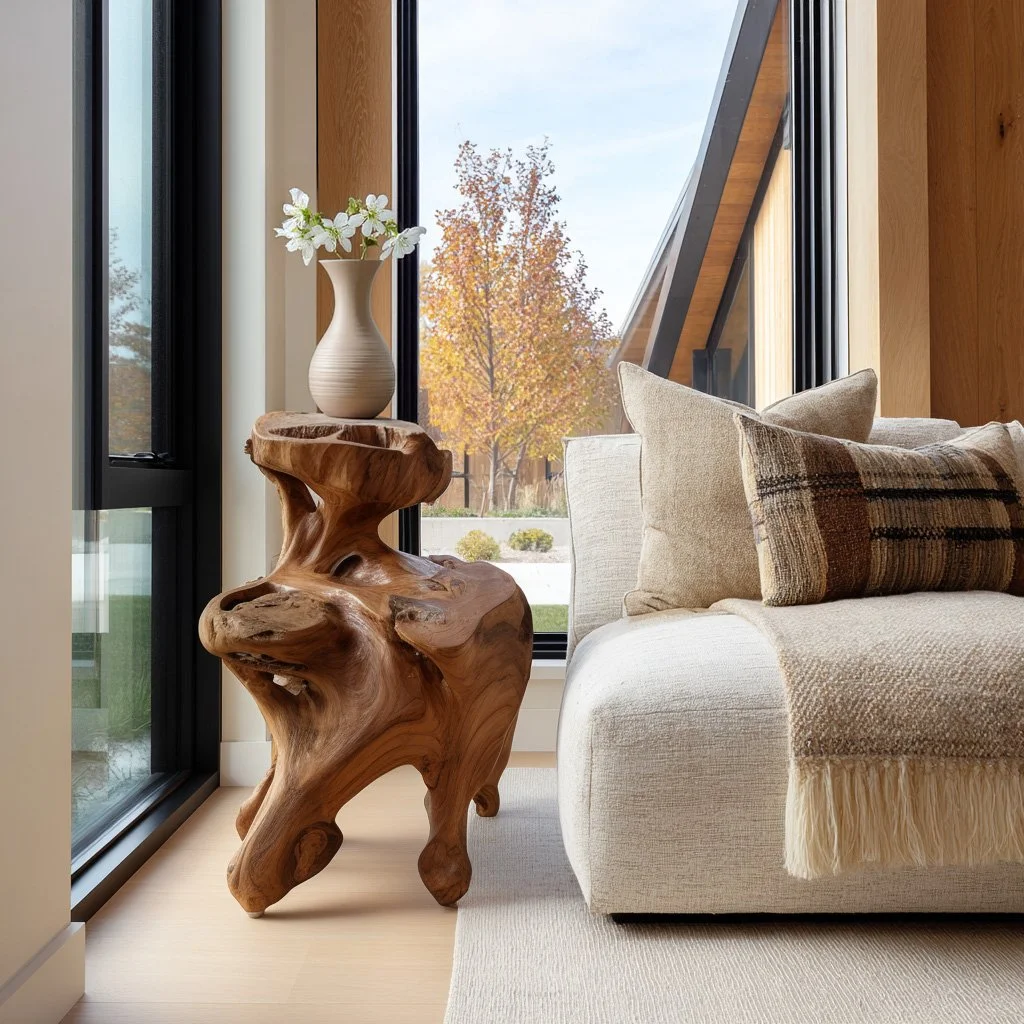
The final piece is a sculptural side table carved from solid teak root. This is not furniture in the traditional sense - it’s more accurately described as functional art.
Teak root retains all the movement and irregularity of its natural growth pattern, which makes each table completely unique. In a design scheme, this kind of piece introduces an organic counterbalance to more structured furnishings like sofas, cabinetry, or built-ins. And it brings in that natural feel we all love in Montana interiors.
In a living room setting, I like to place a teak root side table next to a low-profile sofa upholstered in natural linen or performance wool. The contrast between soft textile and dense, sculptural wood creates depth.
Styling is intentionally minimal: a single ceramic vessel, a stack of well-worn books, or a small linen-shaded lamp is enough. Anything more begins to compete with the form itself. This is the type of piece that often becomes a conversation starter. It doesn’t blend in, and it isn’t meant to.
Designing Around Found Objects
What ties these three pieces together is the joy of finding that special piece in an unexpected place. Each one was either locally crafted, or intentionally reused. In interior design, these types of finds are essential.
They prevent spaces from feeling overly uniform or trend-driven. When found objects are layered correctly with other design elements, the result isn’t just a well-designed room but a lived-in, personal space that feels collected over time. Local furniture stores remain one of the most valuable resources for interior designers and homeowners, especially when they offer one-off pieces like these.
Follow along on the Daunt Designs blog as we highlight more local hidden gems around the Flathead Valley. And if you’re looking for professional interior design help in furnishing or decorating your space, contact Daunt Designs.